






Thuyết minh âm thanh
The ruins of Tran Ha Fort in Bao Ha Commune represent a vital military installation from the 11th to the 19th centuries. It was one of the frontier outposts within the defensive line along the Red River during the feudal era—a structure that has survived to the present day. Originally established during the Ly Dynasty (11th century) as a boat repair station, the site evolved during the Tran Dynasty; the Bao Ha border pass became a crucial rear base for Bao Thang, playing a pivotal role in both military affairs and trade.
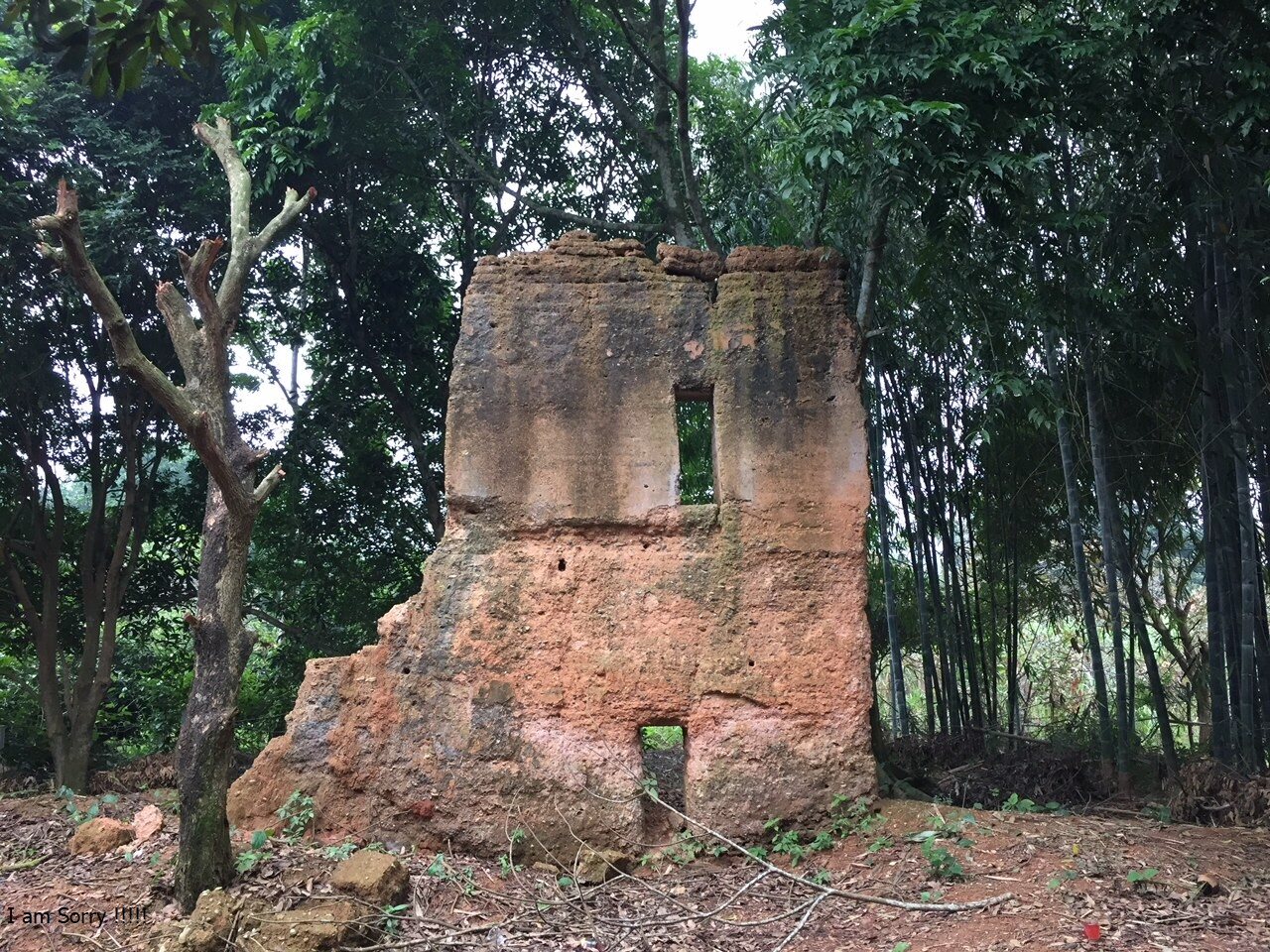
A section of the wall at the Tran Ha Fort ruins
Having weathered the vicissitudes of history, only a remnant of the fort's wall remains today, standing 4.3 meters high and 4.3 meters wide, with a thickness of 50–52 centimeters. Surveys and analyses of the construction materials indicate that the surviving structure of Tran Ha Fort dates back to the latter half of the 19th century (the Nguyen Dynasty). Official historical records acknowledge the fort's significance, confirming its vital role in military and economic spheres from the feudal era through the early 20th century. By the 16th and 17th centuries, the area comprising modern-day Tan An and Bao Ha had become a bustling hub of culture, economy, and politics, characterized by thriving trade and busy river traffic. Tran Ha Fort was consistently selected as a strategic location; together with the Bao Thang border pass, it served as a critical military rear base and headquarters for the nation's naval and land forces. Economically, the fort also played a key role in facilitating the flow of goods via waterways, roads, and railways during the late 19th and 20th centuries. Given its vital strategic importance, the Tran Ha Outpost was consistently utilized by feudal dynasties to leverage economic and military strength—securing the Red River defense line against northern invaders while facilitating trade with neighboring lands.
Designating the Tran Ha Outpost ruins as a provincial-level historical and cultural relic is significant for preserving tangible historical and cultural values and promoting the site to boost local tourism. Furthermore, it serves as a venue to educate current and future generations about revolutionary history, fine cultural traditions, patriotism, the spirit of revolutionary struggle, resistance against foreign invaders, and the defense of the Fatherland's sovereignty.
The Provincial People's Committee has tasked the Department of Culture, Sports and Tourism and the People's Committee of Van Ban District with formulating plans for the protection, management, restoration, and utilization of the Tran Ha Outpost ruins in strict accordance with current state regulations.